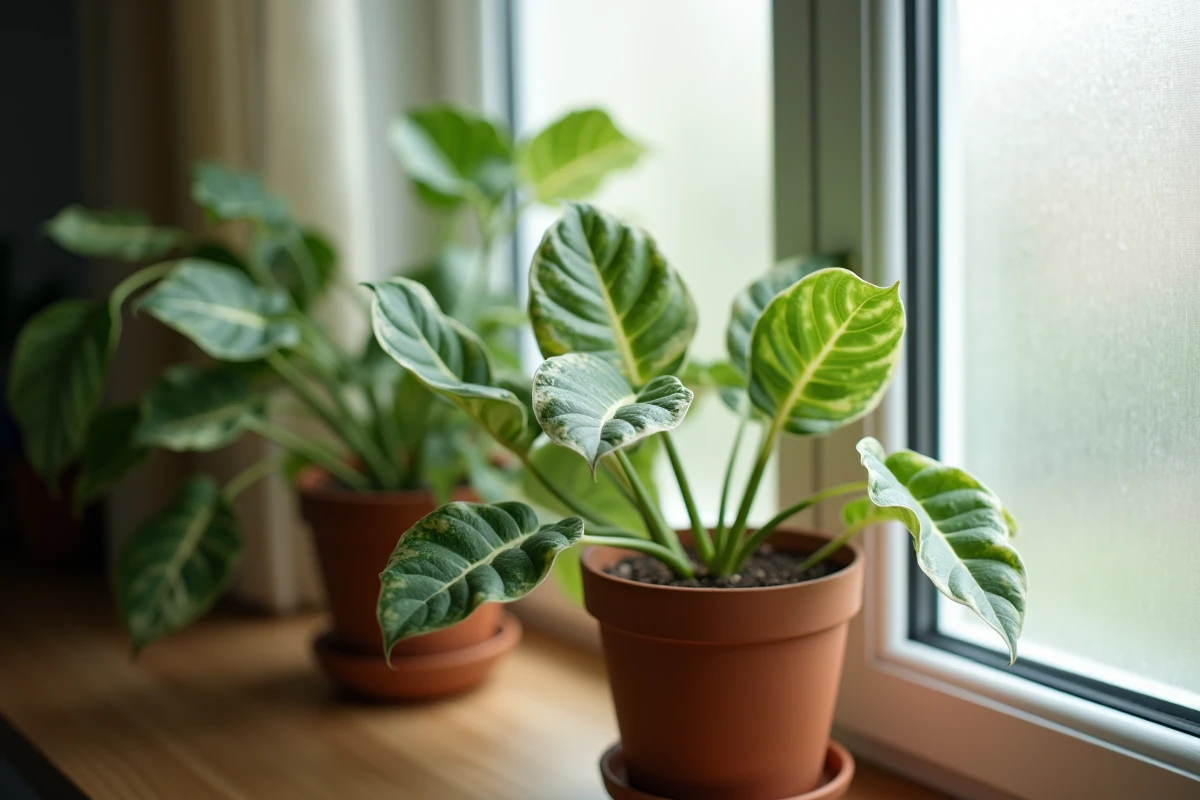
Leaves turning white on an indoor or garden plant can signal a fungus, a pest, sunburn, or a simple genetic anomaly. Identifying the exact cause determines the treatment: a fungicide applied to a sunburn will solve nothing, and moving a plant to the shade will not eliminate a colony of mealybugs. This article compares the main causes of leaf whitening, their distinctive signs, and the appropriate responses for each situation.
Causes of white leaves: comparative table of distinctive signs
| Cause | Appearance of whitening | Affected areas | Favorable conditions |
|---|---|---|---|
| Powdery mildew | White, powdery surface | Leaves, stems, sometimes flowers | Moderate heat, high ambient humidity, little air circulation |
| Sunburn | White-cream or translucent patches, dry tissue | Young leaves, sun-exposed side | Plant abruptly moved to the sun after a stay in the shade |
| Sucking pests (mealybugs, spider mites) | Small white spots or cottony clusters | Undersides of leaves, axils, stems | Dry air, excess water, lack of light |
| Genetic variegation | Stable, symmetrical or marbled white areas | Entire leaves, as they unfold | Naturally variegated variety (Monstera ‘Albo’, Pothos ‘N’Joy’) |
| Deficiency (iron, nitrogen) | Progressive discoloration, veins still green | Young leaves (iron) or old leaves (nitrogen) | Depleted potting soil, unsuitable pH, watering with very hard water |
This table highlights a often overlooked point: the appearance and location of the white is usually sufficient to guide the diagnosis. A powder that wipes off with a finger has nothing to do with a translucent patch embedded in the leaf tissue.
Regarding the disease of pansy flowers on Parlons Déco, the mechanisms described largely overlap with those observed on other ornamental plants, with powdery mildew and pests remaining the main suspects.
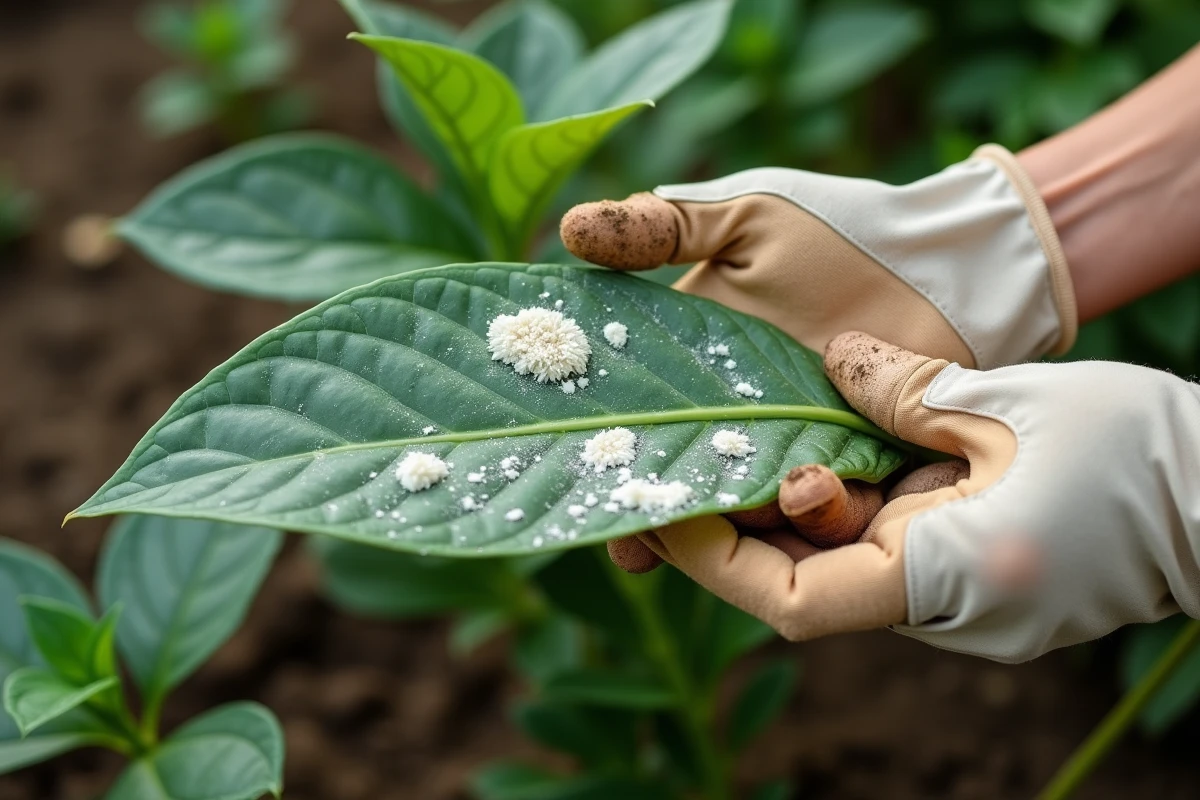
Powdery mildew on leaves: recognizing and treating this white fungus
Powdery mildew remains the most frequent cause of leaves covered with a white veil. This fungus develops on the surface, without initially penetrating deeply into the tissues. Colonized leaves curl, dry out, and then fall off.
On vegetable plants (zucchini, cucumbers) as well as on roses or zinnias, the scenario is identical. Colonization reduces growth and decreases yield for food crops, while it mainly represents an aesthetic detriment for ornamental plants.
Treatment of powdery mildew with sulfur and bicarbonate
When the fungus covers a large part of the plant, spraying a sulfur-based product can halt its development. This treatment should not be done in full sun: the risk of leaf burn is real. Products based on potassium bicarbonate are an effective alternative.
- Remove heavily affected parts before treating to limit the fungal load
- Space out plants or ventilate the room to promote air circulation
- Avoid overhead watering that keeps moisture on the foliage
- Prefer varieties resistant to powdery mildew when available
However, on an indoor plant placed far from any window, powdery mildew is rare. If white appears in this context, one should look elsewhere.
Sunburn and destruction of chlorophyll
Under high heat and direct sunlight, leaves can become white-cream or translucent due to localized destruction of chlorophyll, without the presence of powdery mildew or insects. This phenomenon particularly affects young, still tender leaves and plants recently moved into full sun after wintering in the shade.
The difference with powdery mildew is clear: no powder comes off to the touch. The leaf tissue is dry, sometimes cracking, and the whitened area does not extend to neighboring leaves.
Prevention of sun bleaching
The solution lies in gradual acclimatization. Moving a plant from a dark interior to a south-facing balcony all at once is like exposing unprepared skin to midday sun. A few days in partial shade, then in filtered sunlight, is enough to toughen the leaf tissues.
Leaves that have already been burned will not turn green again. It is better to remove them so the plant can concentrate its energy on new shoots.
Sucking pests and leaf discoloration
Mealybugs, spider mites, aphids: these pests pierce plant cells to feed on sap. The visible result is a scattering of pale spots, sometimes accompanied by white cottony clusters (mealybugs) or fine webs (spider mites).
Infestations are often the result of a cultural imbalance rather than a purely external problem. A lack of light, excess water, or overly dry air weaken the plant and favor the establishment of parasites. Correcting these cultural conditions is at least as crucial as insecticidal treatment.
- Regularly inspect the undersides of leaves and the axils of stems
- Isolate any newly purchased plant for two to three weeks
- Clean leaves with soapy water or diluted isopropyl alcohol in case of light infestation
Genetic variegation: when white is normal
Some plants naturally produce partially or completely white leaves. Variegation results from a lack of chlorophyll in certain cells. The white areas do not photosynthesize, which makes the plant slower to grow and more sensitive to cultural errors.
Horticulturists recommend maintaining a good percentage of green leaves to sustain photosynthesis, and to avoid systematically selecting the whitest leaves in cuttings. A plant whose majority of foliage turns pure white eventually weakens due to lack of energy.
The distinction between pathological whitening and variegation is not difficult in practice: a variegated leaf from its appearance, with stable and regular patterns, is genetic. A leaf that gradually turns white after being green signals a problem to be resolved.
The diagnosis ultimately relies on three simple observations: the texture of the white (powdery, dry, or cottony), its location (surface, tissue, underside), and the recent context (movement, watering, temperature). Cross-referencing these three clues points to the correct cause in the vast majority of cases, without the need for equipment or laboratory analysis.