In the universe and more specifically in workspaces, many microbes circulate. However, manufactured products must be protected from these harmful particles. This is why products must be handled under sterile conditions to properly combat the risks of cross-contamination. Thus, your product is protected from external contaminations. To achieve this feat, you need a laminar flow hood. But what exactly is a laminar flow hood? This article sheds light on the question.
Laminar flow hood, what is it?
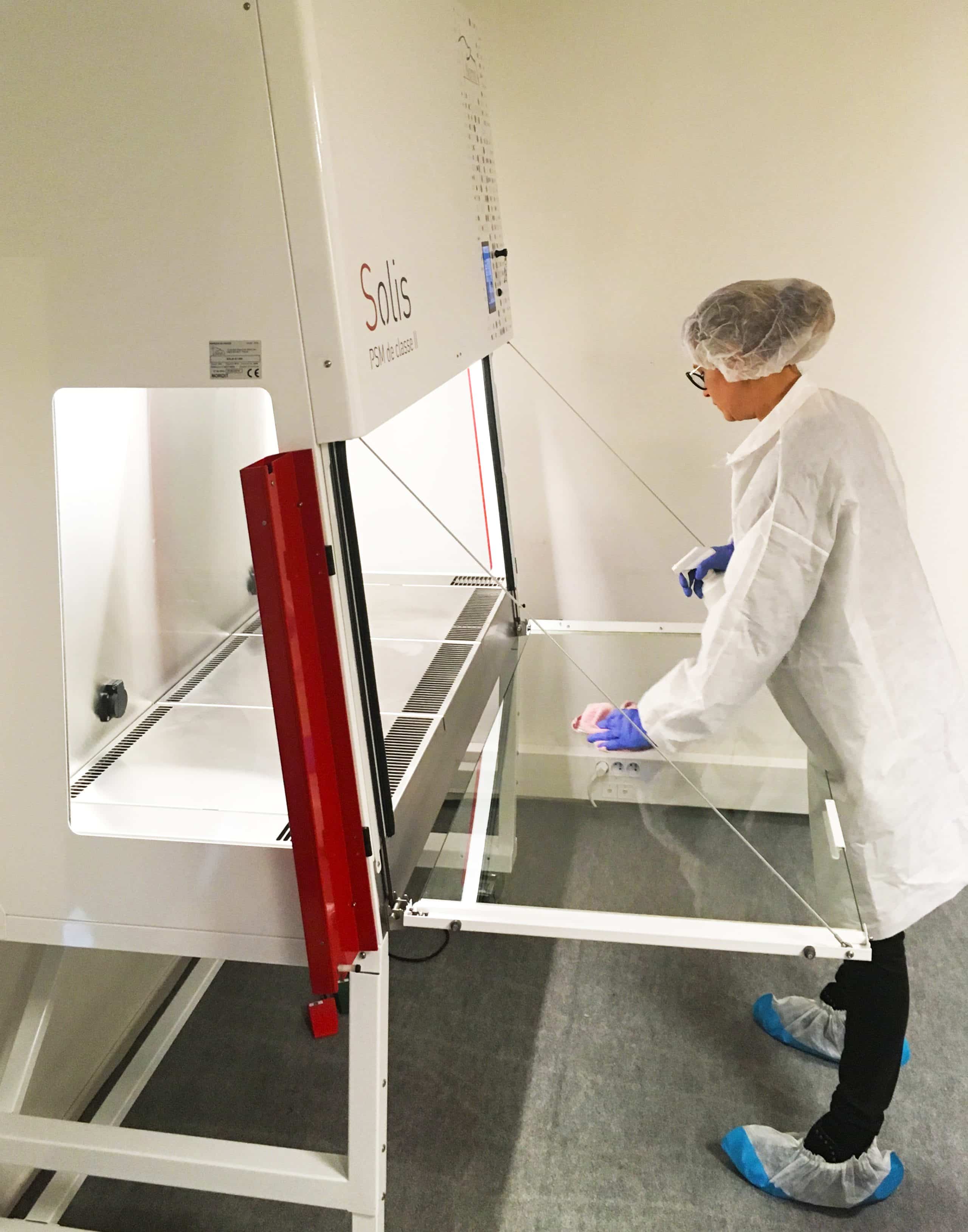 A laminar flow hood is a workbench that prevents contamination from particles and harmful vapors coming from the products being handled. As a result, manipulations are performed under sterile conditions and the products are protected from microbial contamination of biological samples. The laminar flow hood is primarily used to prepare culture media and also allows for inoculating a substrate. Furthermore, this workbench allows for the creation of a spore syringe and for all manipulations that require a more sterilized space. These laminar flow hoods are often found in laboratories.
Operation of a laminar flow hood
Laminar flow hoods are designed to create a work surface free of particles. They bring in air through a highly effective filtration system and exhaust the air from the work surface in a unidirectional airflow. Specifically, ambient air is drawn in by a turbine before passing through a HEPA filter to finally reach the workspace. Once the air passes through the filter, it no longer contains particles that can be dust, yeasts, bacteria, or spores. Therefore, the air is considered sterile. The laminar airflow purifies the air, preventing its particles from affecting your cultures. Laminar flow hoods are mostly equipped with a UV-C lamp with germicidal effects to sterilize the work surface and its contents. You must turn off this lamp when working under the hood to avoid being a victim of cataracts or skin cancers. However, before using the hood, you must sterilize your hands and all your instruments to avoid contaminating your culture. Also, avoid storing objects on the work surface of the hood as much as possible to promote its sterilization.
What to choose between horizontal and vertical laminar flow?
 The vertical or horizontal laminar flows effectively protect products from particles. With horizontal laminar flow, particles are completely evacuated without any turbulence on the work surface. Thus, the samples placed on the work area can no longer be contaminated. Additionally, the back of the hood is well sterilized by the unidirectional airflow that expels particles outside. The vertical laminar flow helps achieve the desired air quality across the entire work surface. It also evacuates particles, but turbulence may be noticeable in the work area. The desired efficiency here is for the entire volume, taking into account width, depth, and height.