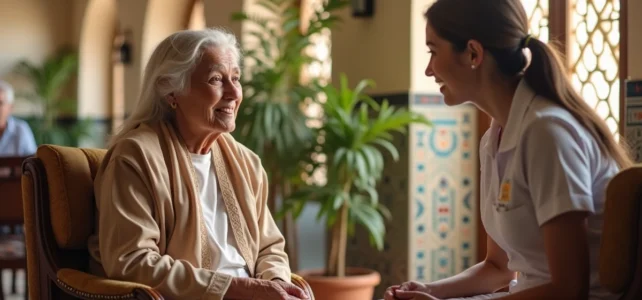
The rates displayed by retirement homes in Morocco hide considerable discrepancies in services. Between a family-run facility without nursing staff and a medicalized establishment with international standards, the monthly budget can vary from one to five times. Here, we detail the actual cost items, emerging formulas, and pricing traps to anticipate.
Senior coliving and shared accommodation in riads: the formulas that pricing grids ignore
The Moroccan market for senior accommodation is not limited to traditional residences. Several structures are positioning themselves in the senior coliving with shared services: individual rooms or studios, catering, cleaning, activities, and sometimes shared home help among residents. The principle is based on the pooling of common spaces, which compresses the unit cost while maintaining comfort close to that of service residences.
Recommended read : How to Optimize Space in a Small Bathroom?
At the same time, informal senior shared accommodation offers are emerging in villas or riads, particularly in Essaouira. Ads on Francophone groups offer full board packages, with a budget capped around 500 euros monthly depending on the expectations expressed by candidates. This hybrid formula, halfway between furnished rental and family retirement home, remains practically absent from institutional comparisons.
To compare the prices of nursing homes in Morocco with these alternatives, we recommend distinguishing three levels: informal shared accommodation (lowest budget), structured coliving (intermediate), and medicalized EHPAD (highest). Each formula corresponds to a different degree of autonomy for the resident.
You may also like : Introduction to Agriculture: How to Choose the Ideal Location for an Educational Project?

Rates of retirement homes in Morocco: what the monthly package really covers
A displayed “all-inclusive” rate is almost never truly all-inclusive. The basic accommodation package rarely includes specialized medical care, incontinence supplies, laundry of personal items, or supervised outings. We observe that high-end establishments charge extra for these services, sometimes through a prepaid credit system.
Items to check before signing:
- The presence or absence of a permanent nurse and a coordinating doctor, as the majority of Moroccan structures do not have heavy medicalization comparable to French EHPADs.
- The cost of external specialized consultations (geriatrician, physiotherapist, dentist), generally borne by the resident.
- Entry or file fees, which can represent the equivalent of one to two months of pension depending on the establishment.
- The annual price revision clause, often indexed to local inflation and fluctuations in the euro-dirham exchange rate.
The gap between the advertised rate and the actual bill frequently reaches several hundred euros per month. Requesting a detailed quote item by item remains the only reliable method for comparing establishments with one another.
Senior residences for purchase in Morocco: when the calculation changes
Real estate programs dedicated to retirees alter the financial arbitration between retirement homes and individual housing. Buying a property in a senior residence with integrated services (security, maintenance of common areas, optional catering) transforms the monthly expense into loan repayment or immobilized capital, with significantly lower condominium fees than a rental in an establishment.
This option is only suitable for autonomous seniors. As soon as a loss of autonomy occurs, the absence of nursing staff on-site necessitates resorting to private home help, the cost of which adds to current expenses. The calculation remains favorable as long as the resident does not need daily assistance for daily living activities.
Resale and liquidity of the property
The resale market for these properties remains narrow. Senior residences for purchase target a niche clientele (foreign retirees, returning Moroccans). In case of a need for quick liquidity or medical repatriation, resale can take several months, or even longer in secondary cities.
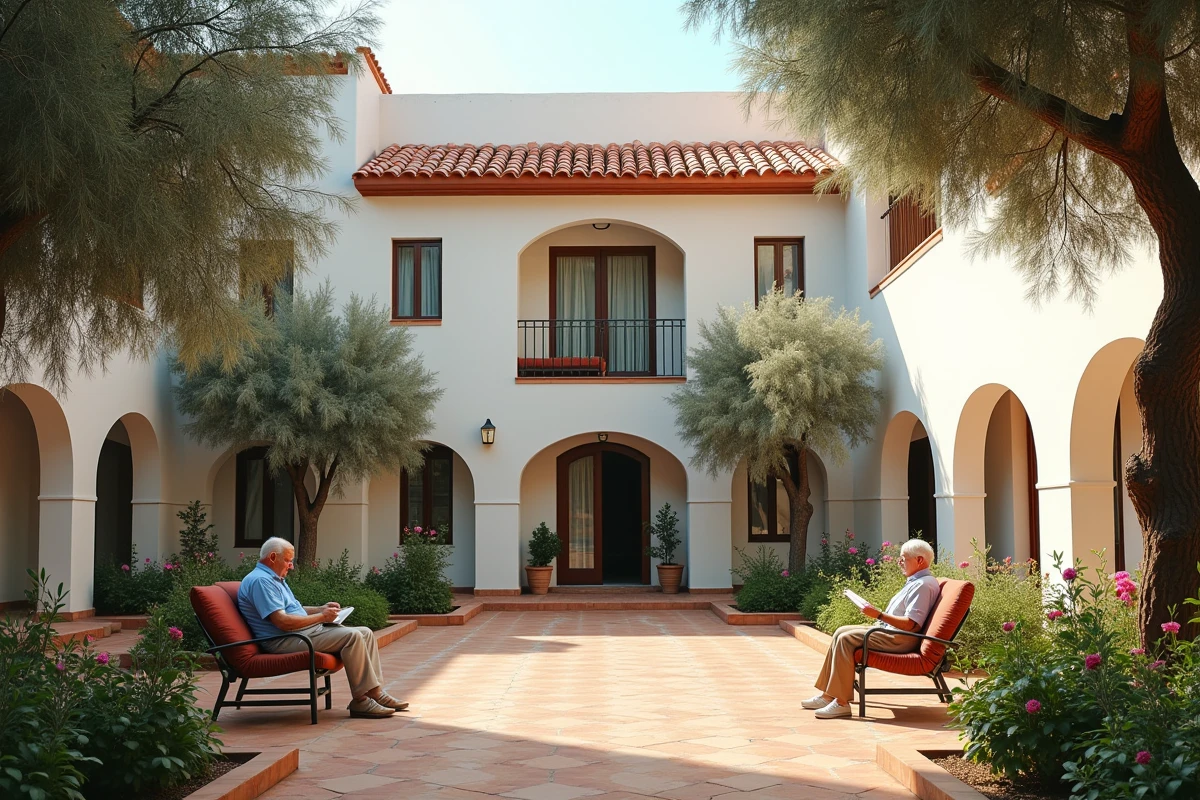
Health coverage and financial aid: the blind spots of the budget
Social coverage is the most underestimated item in a retirement budget in Morocco. Expatriate French retirees retain their pension rights, but the coverage of care on-site depends on their affiliation. The CFE (Caisse des Français de l’Étranger) covers part of the healthcare costs, but does not reimburse the rates charged by Moroccan private clinics at the same level as the French Social Security.
No French aid such as APA or ASH is transferable to Morocco. Residents also cannot claim Moroccan social aid reserved for nationals. This gap leaves the entire cost of dependency to be borne by the resident or their family.
- Subscribe to a complementary health insurance covering hospitalizations in Morocco, with a medical repatriation option.
- Check if the establishment has signed agreements with local clinics for negotiated rates.
- Plan a financial reserve to cover a potential worsening of dependency, as transfers to a medicalized EHPAD in Morocco or a return to France incur high logistical costs.
The cost of living in Morocco is generally lower than in France, but medicalized accommodation for seniors tends to reduce this gap. Establishments that employ qualified staff and import European medical equipment pass these additional costs onto their rates. The final budget depends less on the country than on the level of care required, and this parameter should guide the choice of a facility rather than just the appeal of a low entry rate.