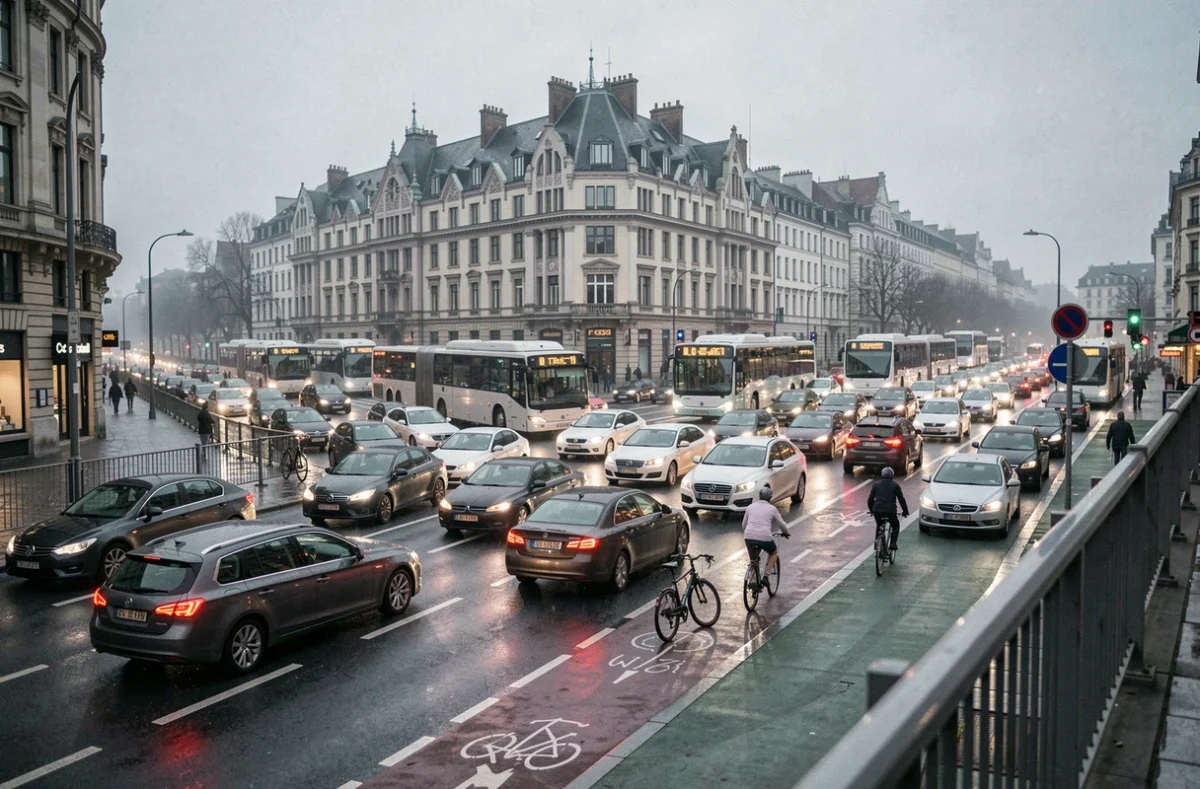
Departure time alone is no longer enough to guarantee a smooth journey in Brussels: roadworks on the Ring, slip-road closures and Low Emission Zone (LEZ) rules can change the picture from one day to the next.
Roadworks on the Brussels Ring: the factor that departure time alone can’t solve
It’s tempting to think only in terms of time slots. Leaving at 6:30 a.m. rather than 8 a.m. seems logical—and it is, on a stable network. Brussels’ road network isn’t stable right now.
The redevelopment of the interchange between Chaussée de Ninove and the R0 is set to take several years, with slip roads closing in phases. For anyone arriving from the west, leaving outside rush hour won’t make up for a detour of several kilometres caused by a closed slip road.
To the east and north-east, other roadworks are making journey times unpredictable. Several Brussels municipalities have publicly voiced concerns about the combined impact of these simultaneous projects. Diversions are adding traffic to secondary roads that are already congested at peak times.
The practical takeaway: before choosing a departure time, check the day’s roadworks notices for your route. A route that’s usually clear at 7 a.m. can become a trap if a new phase of works has just begun. Anyone looking to avoid traffic jams in Brussels will get more benefit from adapting their route than simply setting their alarm earlier.
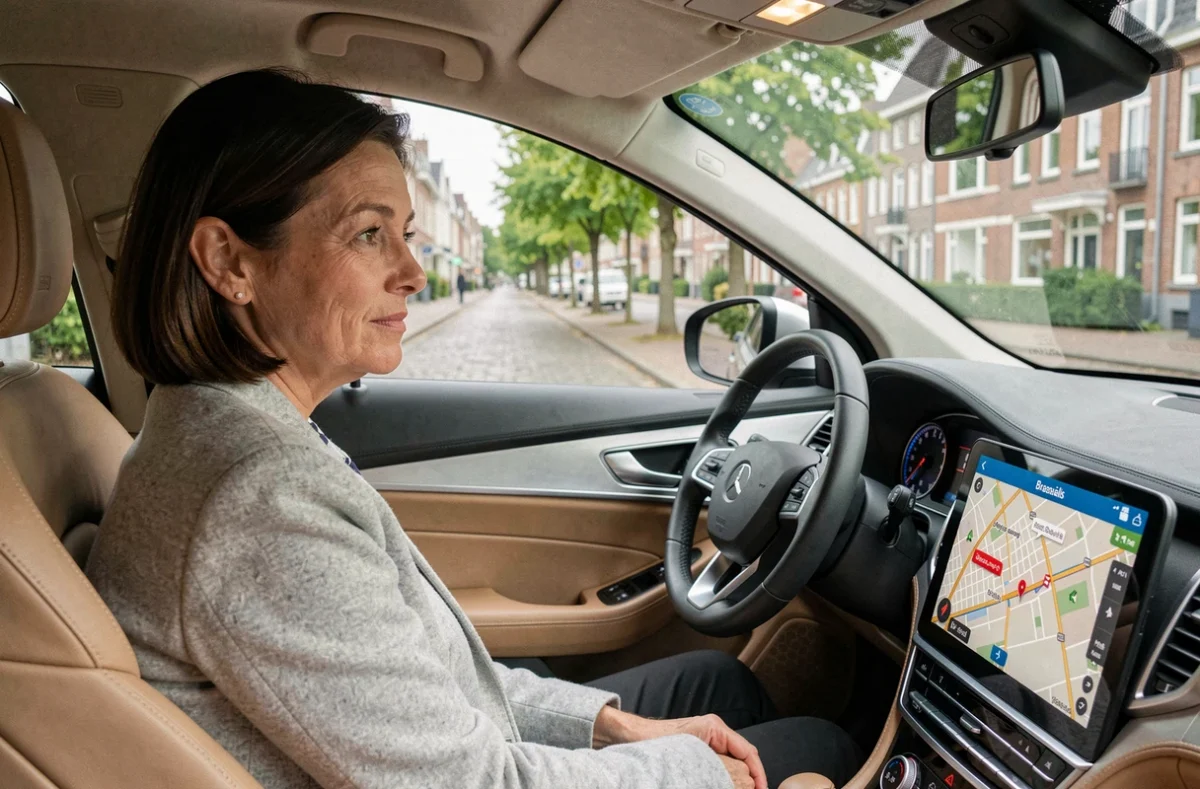
Rush hour in Brussels: times to avoid and those that are still manageable
Traffic in Brussels follows a predictable pattern, provided you look at it by entry point rather than as a whole.
Morning: two distinct waves
The first wave of congestion starts around 7:15 a.m. on the southern approach roads (E19 from Waterloo, Chaussée de La Hulpe). It peaks between 8 and 9 a.m., when school traffic overlaps with commuter journeys. On the northern routes (A12, Boulevard Lambermont), the peak comes about 15 minutes later, leaving a useful window for departures before 7 a.m.
Leaving between 6 and 6:45 a.m. remains the most reliable time to cross the capital without major delays, regardless of your entry point, provided roadworks are taken into account.
Evening: congestion lasts longer
Traffic leaving Brussels is more spread out than traffic entering the city. Congestion builds from 4 p.m. on the inner Ring and often doesn’t ease until after 7 p.m. Traffic on the R0 is noticeably lighter between 7:30 and 8 p.m., provided you don’t encounter night-time roadworks, which are common on the western Ring at the moment.
Wednesday can be misleading
It’s often said that Wednesdays are quieter in Brussels. In reality, it depends on the neighbourhood. With fewer school journeys, roads around schools are less busy, but the motorways remain congested.
Getting around Brussels by entry point: three practical scenarios
Rather than giving one time that works for everyone, here’s what changes depending on where you’re coming from.
- From the south (E19, N5): current roadworks on the western Ring don’t directly affect this route, but diverted traffic causes congestion on Chaussée de Waterloo at peak times. Aim to pass through before 7 a.m. or after 9:30 a.m.
- From the west (E40, Chaussée de Ninove): redevelopment of the R0/Ninove interchange means detours. Check the diversions in place on the morning of your journey. Even outside rush hour, the trip can take significantly longer.
- From the east or north-east (E40 Liège, A3): additional roadworks are affecting this area. The 6–6:45 a.m. window remains the safest option, but checking for slip-road closures the night before can help you avoid surprises.
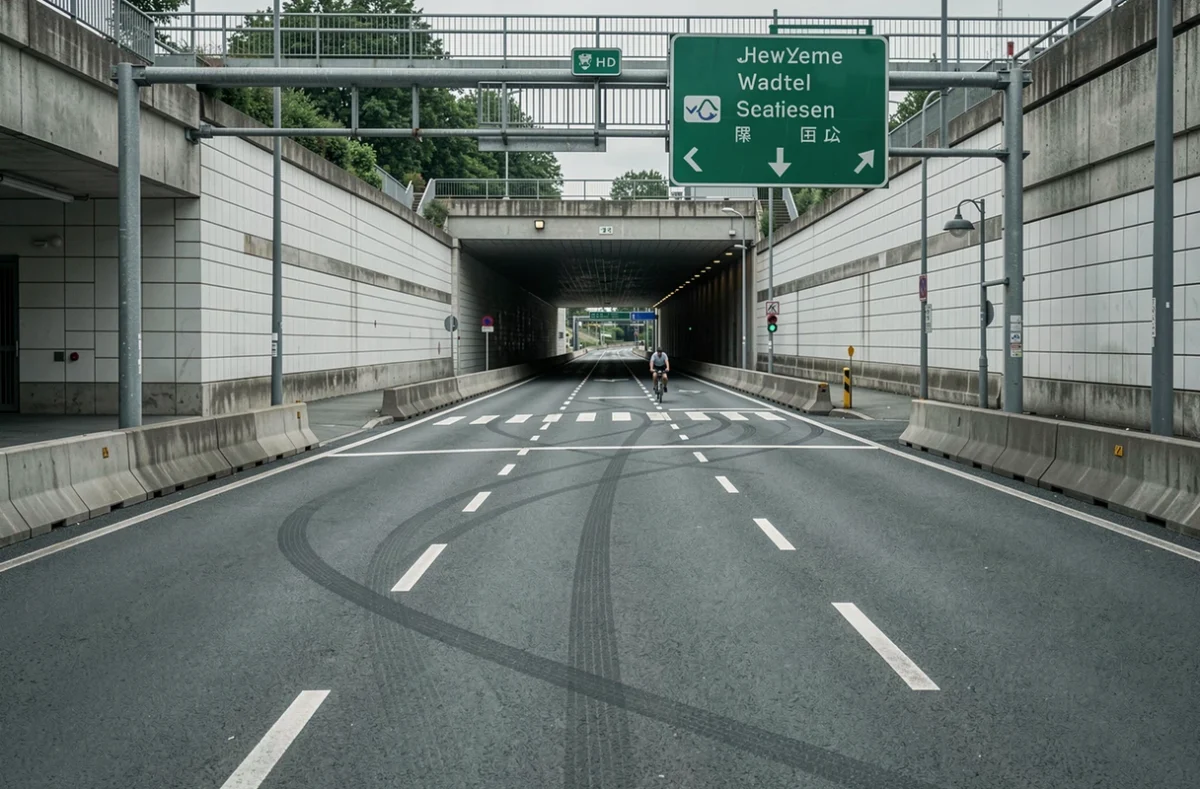
Brussels Low Emission Zone: check before you drive
A perfectly timed journey is pointless if your vehicle isn’t allowed into the LEZ. The Brussels-Capital Region’s Low Emission Zone covers the entire region, and access requirements are gradually becoming stricter.
Before planning your journey, check your vehicle’s Euro emissions standard and the rules in force on the day. Fines are issued automatically using number-plate recognition, including for vehicles registered abroad. A one-off visit may be covered by a day pass, but the conditions vary depending on the vehicle’s engine type.
For drivers coming from France or Wallonia, checking this is just as important as choosing a departure time. Arriving without getting stuck in traffic but receiving an LEZ fine is hardly stress-free.
Three things to check before every trip to Brussels
- Check for roadworks and slip-road closures on the R0, especially on the western and north-eastern sections, on the day of your journey or the night before.
- Check that your vehicle is eligible to enter the Brussels LEZ before setting off, especially after a change to the regulations or their schedule.
- Choose your departure time based on your entry point into Brussels rather than relying on a general off-peak time: traffic behaves differently on the southern E19 and the western E40.
There’s no single best time to drive in Brussels. Each morning, you need to weigh up three things: your route, the day’s roadworks and your vehicle’s emissions standard. It’s less convenient than following a simple rule, but it’s the only approach that works on a road network that’s constantly changing.